The easiest energy savings are usually found first. The challenge comes when a building is already performing well and you’re trying to identify what comes next.
A recent review of a listed property focused on exactly that challenge. Previous retrofit work had already delivered a well-insulated and comfortable home, with thermal imaging showing strong performance across much of the building fabric. Rather than revealing major weaknesses, the survey confirmed that many of the fabric improvements were doing exactly what they were designed to do.
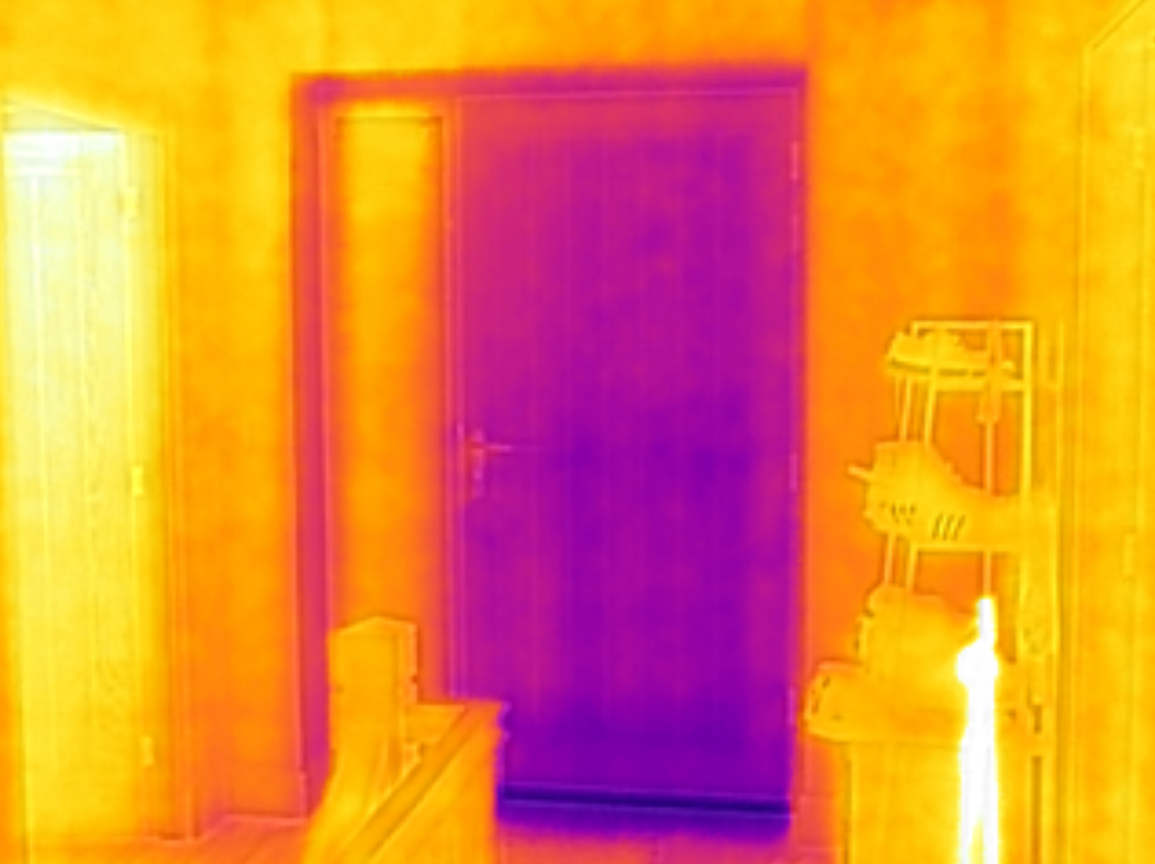
Survey revealed a quality retrofit with high insulation performance. The insulated door shows as cooler as it is thinner than the walls
The assessment instead highlighted two future priorities. The first was heating. Despite a well sized and installed radiator system being efficient in technical terms, it was being heated by an electric boiler that is very expensive to run due to the relative price of electricity. A heat pump would be a relatively straightforward improvement as the radiator system was well designed, would drastically reduce running costs and installation costs are reduced further by available Government grants. The second was ventilation. As heat loss had been reduced, fresh air movement through the building had become increasingly important for maintaining healthy indoor conditions and managing moisture levels.
The outcome wasn’t a recommendation for another major retrofit. It was a roadmap for the next stage of improvement, identifying the changes most likely to reduce energy costs while protecting comfort and building health.
Good building performance is rarely achieved through a single upgrade. It comes from understanding where the biggest opportunity lies at each stage of a building’s journey and focusing effort where it will make the greatest difference.
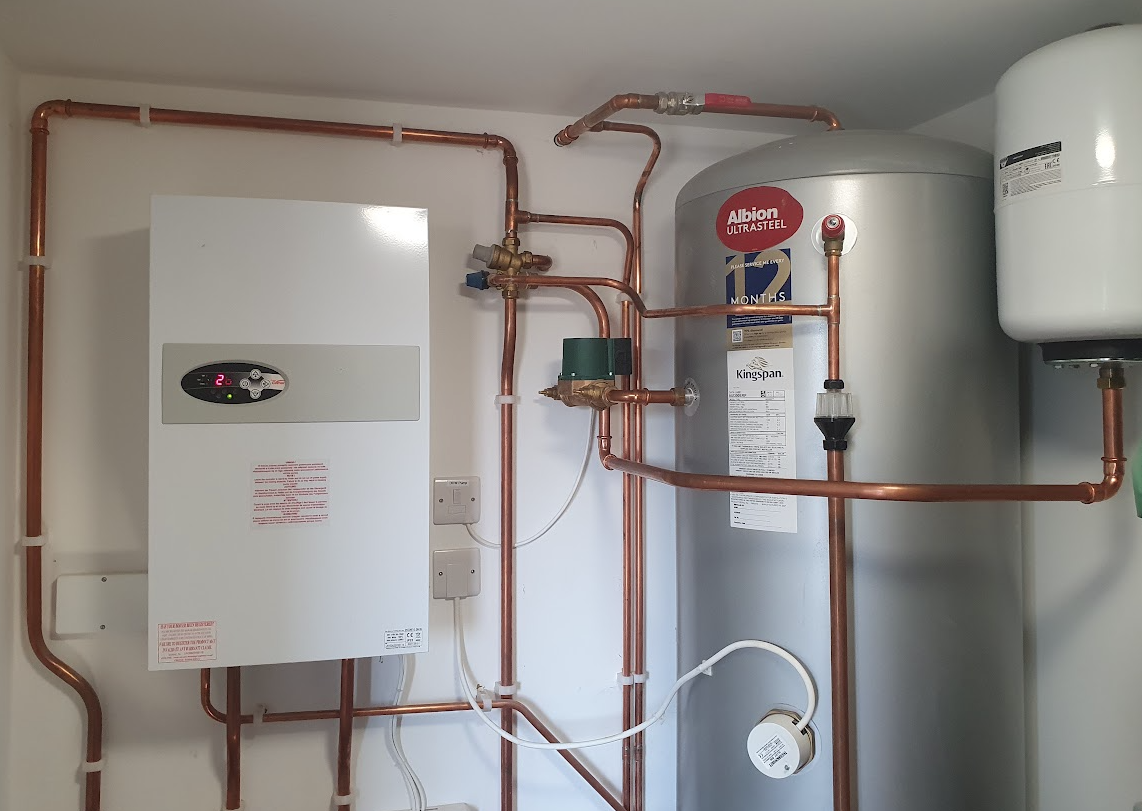
A well installed heating system but in the current economic climate modern electric boilers are expensive to run