Simon Lock is a key member of the Woohoo team, working as a Sustainability Consultant.
Here, he shares his career journey to date, what he loves about his job and how he achieves success.
What’s your career experience to date?
I’m currently working as a Sustainability Consultant as part of the Woohooo team. I’m a relative newcomer to the heritage building industry, with a background in performance engineering.
I originally qualified with a Masters in Motorsport Engineering and specialised in vehicle electronic systems and controls strategy. This involved lots of accurate vehicle measurements, using a wide variety of sensing technologies and how controls systems use this information to gain the most performance from a vehicle, working across British 125cc, World 125cc, Formula 1 and Formula E.
My work then evolved into performance engineering, and simulation work in the electric car series Formula E, culminating in race wins at world championship level.
My experience has transferred to buildings with the approach of accurately measuring required data, using the data to understand the underlying physics of a building, and then simulating different changes, to ensure that the proposed changes are going to have the required impact.
How do you achieve success in your role?
Success to me is enabling project partners to make well-informed decisions, to achieve their goals.
This involves taking the time to understand what the client wants to achieve with their space, properly understanding how their building works through data and simulation and then highlighting to them what options they have available, to make their project a success.
Success also takes other forms, such as visually showing how much waste is in a process or giving insight into how someone’s building works and how they can get the best out of it.
What’s your favourite aspect of your role?
That’s easy, the best part of the role is watching what people can achieve with the information that we’ve been able to provide. This could be changing from space heaters to an air source heat pump to drastically reduce their bills, providing a set of drone photos that has enabled funds to be gathered for a roof replacement, changing façade renders that have allowed someone to gain listed building consent, or even a company changing to a fleet of electric vehicles, to reduce their emissions.
What’s your favourite thing about being part of the Woohoo team?
I particularly enjoy the collaborative nature of the work we do. We aim to learn every day, and we always want to base our decisions on information, rather than hunches.
We can’t always be experts, but if we gather good information, we can use this to communicate with others who do have that experience and learn from that.
Finally, tell us a fun or surprising fact about you…
I keep bees and have a fascination with nature. How ecosystems have evolved and use the resources and physics in their landscape provide infinite wonder and inspiration!
If you’d like to get in touch with Simon to discuss your next project (or hear about his time with Formula 1… or get some advice on beekeeping!), be sure to contact us, we’d love to hear from you.
As a business owner, you may understand the importance of efficiency. But are you overlooking a major source of wasted resources: heat loss?
Commercial buildings, with their larger footprints and complex systems, often consume far more energy than necessary. This not only impacts your bottom line but can also contribute to a larger environmental footprint.
In this practical guide, we aim to show you how to reduce heat loss, save money, and align with government objectives for a greener future.
Know Your Numbers: Measure and Analyse Your Energy Consumption
The first step to reducing waste is understanding where it’s happening, a good place to start is by auditing your energy usage. Compare your heating bills across seasons (e.g., January vs. July) to identify potential discrepancies. This helps pinpoint areas where insulation or heating systems might be underperforming.
Remember, data is your ally; it reveals where improvements are most needed and whether you are improving. As with all tips mentioned in this blog, Woohoo can assist with an audit, to enable you to find out where your money is being used.
Optimise What You Have: Simple Steps for Immediate Impact
Before investing in major upgrades, focus on maintaining and optimising your existing systems. Often, buildings are not getting the best out of what they currently have and so implementing a maintenance schedule can often yield sizeable returns.
Seal the Gaps: Air leaks can be a major source of heat loss and reduced building comfort. Whilst maintaining adequate ventilation is critical for buildings, checking whether window and door weather strips are still functionality and sealing up uncontrolled leaks and often yield improvements.
Heating System Tuning: Regular maintenance of your heating system is crucial to ensuring it is performing at its best. A well-tuned system operates at peak efficiency, minimising energy waste. This includes boiler servicing, pipework checks, radiator bleeding and ensuring radiators are balanced so the building heats up evenly. A well-tuned heating system will ensure the most heating energy out of the fuel you are purchasing.
Smart Controls: With guidance from your heating engineer, improving the control systems could give a good return based on a small investment and allow tuning the building better to the required heating demands.
These simple, cost-effective measures can significantly reduce heat loss and improve energy efficiency.
Plan for Long-Term Improvement: Sustainable Solutions for Lasting Value
Once you’ve optimised your existing systems, consider long-term improvements that align with current government sustainability objectives.
Heating system upgrades: Heating technologies are ever evolving with sizeable efficiency gains to be had. Currently with the government’s net zero strategies, there are grants to change to renewable heating technologies.
Insulation upgrades: Insulation upgrades should be carefully considered so not to compromise the longevity of the building, but upgrades to walls, roofs, and floors to minimise heat transfer should all yield good returns. This is a significant investment, but it offers substantial long-term savings.
High-performance windows: Windows typically have up to a 30-year lifespan and so can be a great opportunity for improvement. These could be replaced with secondary, double or triple-glazed units to improve thermal performance.
Heat recovery systems: Often, a lot of commercial processes will involve waste heat. Looking at whether this waste can be captured and re-used can sometimes yield large returns.
Embrace modern technology: Commercial buildings typically use large amounts of daytime electricity that usually make solar panels a good option for investment. Other technology such as advanced building management systems may also reduce maintenance and maintain better control over the heating and ventilation of a building.
Remember to consider overheating: Commercial buildings often generate a lot of internal heat and so being ever mindful with a warming climate not to tip the building to have high summer overheating, which in turn will require significant amounts of energy to cool, is important.
Remember, reducing heat loss shouldn’t compromise building comfort or longevity. In fact, it can enhance both. Proper insulation and efficient heating systems create a more comfortable environment for occupants and protect your building from moisture damage and other issues. This translates to increased property value and reduced maintenance costs, making your building a more valuable asset.
Whilst the focus is often reducing the immediate utility bills often the greater gains from improvements are increased building value, reduced maintenance and greater productivity. By implementing these practical strategies, you can reduce heat loss, save money, and contribute to a more sustainable future. Start today and reap the rewards of a more efficient and valuable commercial building.
Looking for Support in Reducing Heat Loss in your Building?
Jess Barrow is our Heritage Director, here at Woohoo.
Here, she shares her career journey to date, her passion for growing vegetables, and what she loves about the work she does.
What’s your career experience to date?
I completed my undergraduate studies in Rural Estate and Land Management, before starting out my career as a Geotechnical Surveyor in Shrewsbury. I fell in love with the investigation of historic buildings during this time and returned to higher education to gain a Masters in Conservation of Historic Buildings, from the University of Bath.
I went straight from there to work for Aberdeenshire Council as an Environmental Planner and Project Officer. Here, I worked on lots of projects restoring dilapidated community buildings, such as memorials and historic churchyards on the northeast coast of Aberdeenshire, whilst also providing specialist consultations on development proposals.
I left Aberdeenshire to work in Project Management for Turner and Townsend in Manchester, guiding clients through project development and grant funding applications. From there, I returned to the public sector and worked as a Conservation Officer, consulting on an array of applications from major developments to householder applications.
Now, I’m part of the Woohoo team as Heritage Director!
How do you achieve success in your role?
My passion for the historic built environment comes from my love of place. Success for me is helping people unravel history to understand how their property played a role in the past, so that we can make a new relevant story for its future.
A measure of my success for my clients is gaining listed building consent/planning permission for their proposals, helping clients gain grant funding or just improving building conditions.
What’s your favourite aspect of your role?
I love piecing together different elements of a building’s history, with its present being to determine its future; I love researching and getting up close to buildings!
I also love working with community groups and making a difference to people’s lives. I strongly believe that historic buildings help people connect, give people a sense of place and build stronger communities.
What’s your favourite thing about being part of the Woohoo team?
I enjoy being able to collaborate with clients and other professionals to find solutions for buildings. Here at Woohoo, we always consider things holistically and take the time to get to know our site and its users, to help determine the best intervention.
Finally, tell us a fun or surprising fact about you…
If you’d like to get in touch with Jess to discuss your next project (or gain some Monty Don-esque gardening advice) be sure to contact us, we’d love to hear from you.
Ever feel like your energy bills are a mystery? You’re not alone. Many homeowners struggle to understand where their money is going, especially with fluctuating prices and a variety of energy sources.
In this blog, we’ll aim to break down the typical energy sources used in UK homes, explaining the cost differences, and then dive into how much you could be wasting – and how to stop!
The ‘Big Three’
While every household is different, the majority of energy costs typically fall into three main categories. Understanding these “big three” energy consumers is the first step to taking control of your spending.
1: Heating (50-70%): Keeping your home at a comfortable temperature during the colder months usually consumes the largest share of your energy budget. The exact percentage depends heavily on your local climate, insulation levels, and the efficiency of your heating systems.
2: Water Heating (15-25%): Heating water for showers, baths, washing clothes, and dishes is another significant energy user. Factors like the number of people living in your home, showering habits, and the efficiency of your water heating system all play a role.
3: Appliances (10-20%): From refrigerators running 24/7 to washing machines and dryers, our appliances contribute a substantial portion to our energy bills. The type of appliances you own, their energy efficiency ratings, and how often you use them all impact this category.
Fuel Sources
Most UK residents purchase energy for these household functions from a combination of the following fuel sources:
Electricity: Powers lights, appliances, electronics, and some heating systems. While essential, electricity is often the most expensive energy source per unit. This energy source is key to the UK government’s net zero strategy.
Gas: Common for central heating, hot water, and cooking. Generally cheaper than electricity, but prices can still vary significantly.
Heating Oil (Kerosene): Typically used in some rural homes for heating and hot water. Prices are volatile and can be higher than gas in some areas.
Biomass (Wood Pellets, etc.): Biomass heating is generally seen as a renewable alternative to fossil fuels. However, fuel costs can vary, and specialised equipment is required.
For the average homeowner in England and Wales, energy bills currently average £1,107 for gas and £1,144 for electricity (ONS 2024 data). While reducing these costs is a clear benefit of home improvements, many upgrades also deliver a significant return on investment through increased property value (2-5%)
Where is the Energy Wasted?
Heating
Gas has long been the dominant fuel for heating UK homes, prized for its affordability and relatively clean burning. But just how much gas are we talking about?
The average annual UK household’s gas consumption alone contains enough energy to drive a typical petrol car halfway around the globe!
That’s a staggering amount of energy, prompting the question: where does it all go? Several factors are at play, including the size of the building, the quality of a building’s insulation and the efficiency of the heating system.
Poor insulation is a major culprit; the average UK home (EPC rating D) needs roughly five times more energy for heating than a similarly sized Passivhaus. Then there’s the efficiency of the heating system itself. Older, non-condensing gas boilers can waste up to 20% of the gas energy during conversion to heat, and another 10% can be lost through poor controls or uninsulated pipes. That’s a potential 30% energy loss! While gas was historically cheap, rising prices are now exposing these costly inefficiencies.
The current energy revolution centres around heat pump technology. Modern air source heat pumps can extract energy from the outside air, achieving efficiencies of over 400%! This means they can generate four units of heat for every unit of electricity used. Even though electricity is generally more expensive than gas, this remarkable efficiency often makes heat pumps a cheaper heating solution than traditional gas boilers.
Hot Water
Saving energy on hot water can be surprisingly easy; the key is often to avoid overheating and over-storing.
A common example of wasted energy is heating water to 70°C and then mixing it with cold water for a 40°C shower. This wastes energy both in the initial heating and through increased heat loss from the hot water cylinder. Most hot water systems allow homeowners to adjust the temperature setting, often via a dial or thermostat on the boiler or hot water tank.
Reducing below 60°C significantly increases the risk of Legionella. Plenty of information is available online to help you assess your Legionella risk, and modern heating systems often include features for running periodic Legionella-killing cycles. The risk of Legionella is generally reduced in homes with combination boilers (which heat water on demand) or where the hot water cylinder is emptied and refilled daily. As reducing hot water temperature does carry a risk, if in doubt, consult a qualified plumber or heating engineer.
Appliances
Appliances, while essential for modern living, can be significant energy wasters if not chosen and used wisely.
Older appliances, in particular, often lack the energy-efficient technologies of newer models, consuming far more electricity than necessary. Even seemingly innocuous habits, like leaving devices on standby or running washing machines and dishwashers half-full, contribute to unnecessary energy drain.
“Phantom power,” the energy consumed by devices even when switched off but still plugged in, is another hidden culprit. Choosing appliances with high energy ratings (A or above) and adopting mindful usage habits, such as fully loading machines before running them and unplugging devices when not in use, can significantly reduce appliance-related energy waste and lower your bills.
Key appliances to be mindful of and invest in energy-efficient items are washing machines, tumble driers, dishwashers, fridges and freezers.
The rules are generally if they involve water, heating or cooling, or are on continuously, they will typically use a lot of electricity.
Smart electricity usage involves taking advantage of off-peak tariffs. By scheduling appliances to run when electricity is cheapest, homeowners can make a noticeable dent in their bills. Home batteries are revolutionising this approach, enabling customers to store off-peak electricity for use whenever needed.
The expenditure on energy by UK households is substantial, creating a significant drain on family budgets across the nation. This highlights not only the scale of our energy use but also the immense opportunity for reduction.
Woohoo is here to help
From simple fixes like better insulation and draught-proofing to embracing innovative technologies like heat pumps and smart controls, there’s a vast potential to significantly decrease our energy consumption. Looking for advice on how to lower your energy bills and increase the value of your home? Contact us for an initial chat, we’d love to hear your plans and see where we can help you in being more sustainable in your own home.
Every building has the potential to use less energy and ultimately save money. The vast majority of UK buildings in fact could reduce their energy consumption by up to 75%.
The key to identifying your potential savings is to find the size of energy demand on your home, and what proportion of that energy is being lost trying to meet the demand. From there, we can work out ways to reduce the demand and explore the most efficient methods to supply it.
Not sure where to start? Woohoo can support you with all aspects of this, and in this article, we’ll look at the different benefits of an energy health check and how we can support you in making your home more efficient.
Assessing the building fabric
In the local climate of the Lancaster for example, most of the energy usage for a historic building will come from heating it in the winter months. The amount of heat required is proportional to how big the building is and what each part of the building is used for.
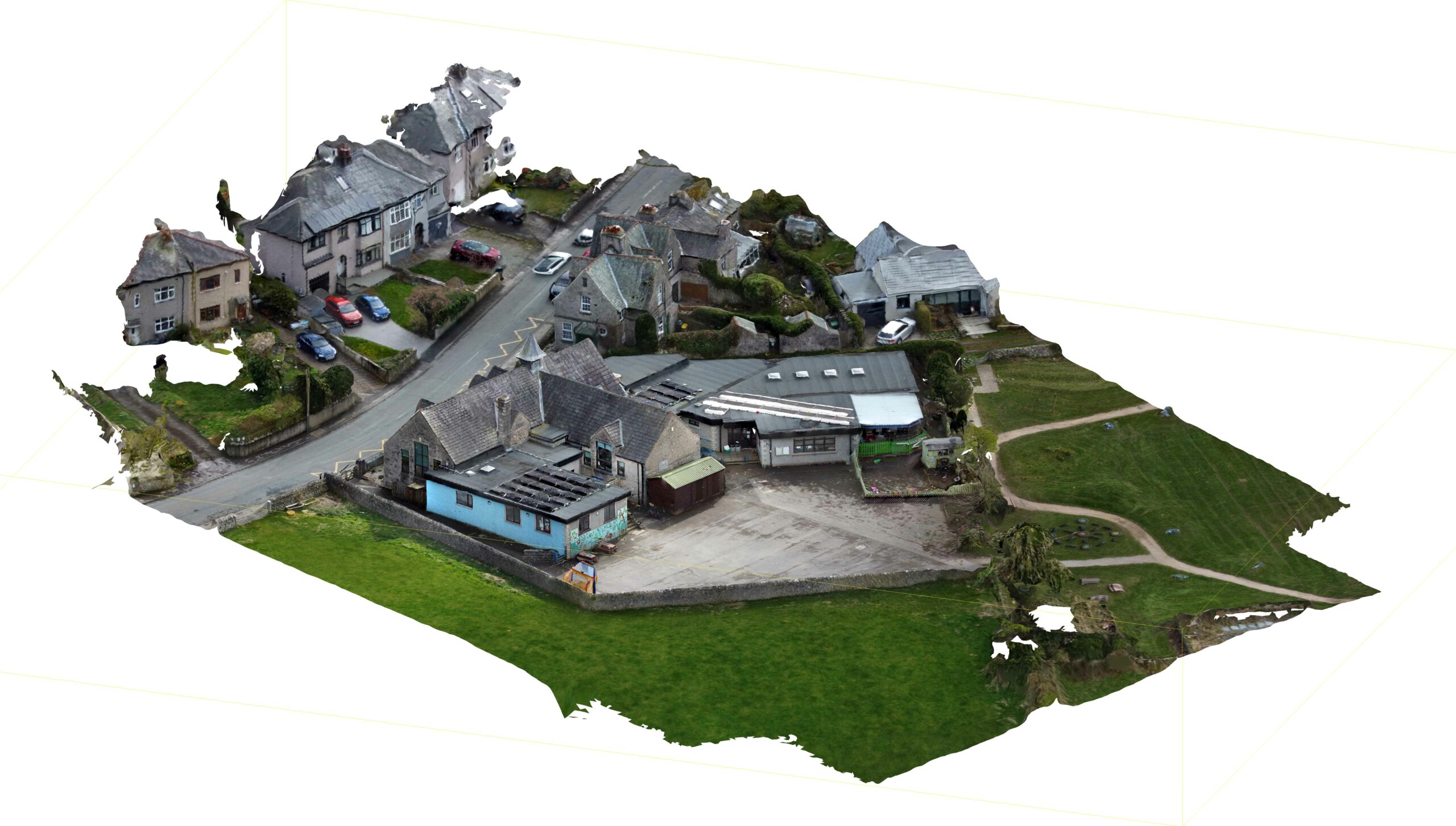
Most methods, such as EPC, use theoretical values based on inspection. We always aim to find out what is really happening by comparing modelled information to bill, temperature and humidity data, occupant reports or thermal camera data. This helps us to quickly establish if a cavity wall has insulation for example, or whether a ceiling with no access has insulation.
By seeing the actual performance through this method, we highlight the areas losing energy and ensure the fabric improvements will save you money. Knowing the sizes of walls, windows, floors etc, help to estimate the cost of a retrofit against the cost of saving.
Assessing the fabric: Site render
Assessing the heating system
Now that we’ve established the fabric performance, we can model against the internal gains for your building, such as occupancy, appliance usage and solar gain, to calculate the heat requirement and how much energy the building’s heating system should be using.
With measured bill data, we can find out if the system is performing and if not, where the heat is being lost. We can then establish what technologies are available for the future to save costs.
Assessing the heating: radiators
Taking the holistic approach
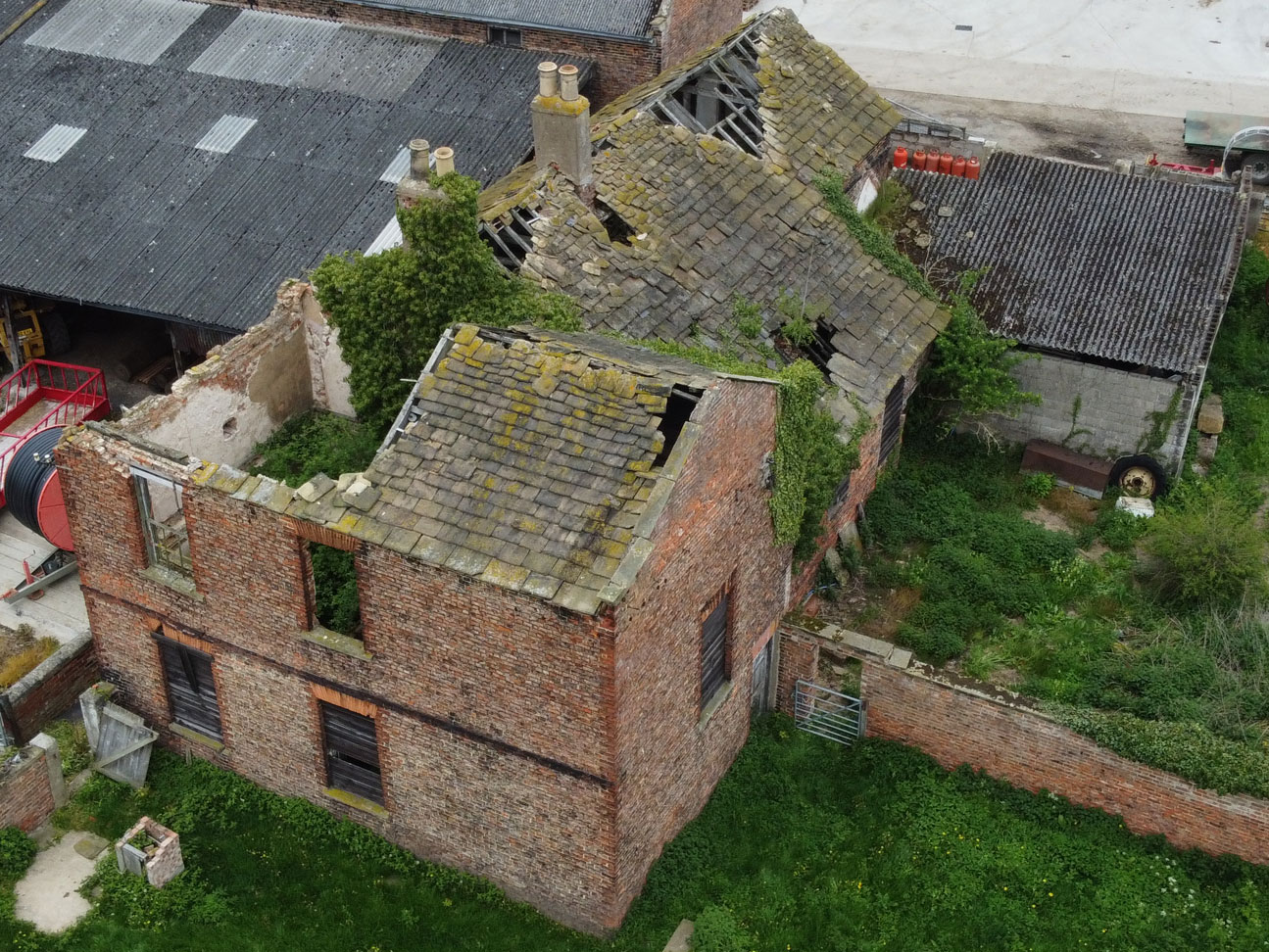
There are many other ways that improvements can save energy but also have a wider impact. For example, a well-maintained roof will keep water off walls and in turn will use less energy, but it will also extend a building’s life and reduce damage.
Improving a heating system in an office building to make it more comfortable may not have a significant energy reduction but could lead to healthier occupants, improved occupancy or attract more customers with its efforts to reduce emissions.
Our aims for building improvements look beyond just energy reduction and look at factors such as extending building lifespan, improving comfort and occupancy and reducing lifecycle emissions.
Taking the holistic approach: listed barn for redevelopment
Assessing the risks and values
Often with historic buildings, every change carries a risk. Well publicised risks can include mould appearing after retrofitting or building fabric decaying because moisture has been trapped by insulation.
When planning improvements to your home, these risks should be highlighted, with the intention of mitigating them as much as possible, with a good understanding of the existing building fabric and how it works. Understanding these risks can save significant costs further down the road.
With heritage buildings, there are often heritage values that need to be considered. Take a listed building for example, this could be obtaining listed building consent for solar panels and underfloor heating. By working with a heritage consultant who understands these values and required consents, this can often save money by not stalling projects or having to undo work.
Assessing the options
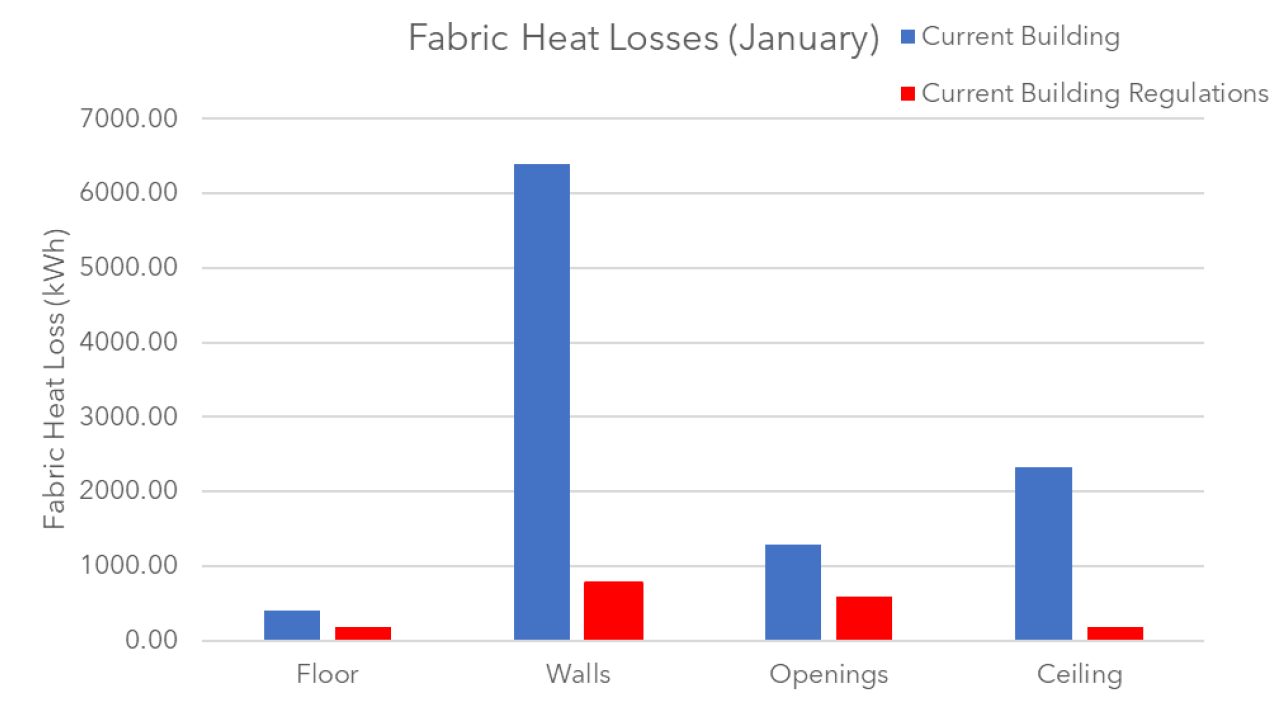
Once your options have been established and indicative costs understood, this can be balanced against the risks and savings. We can support you in looking at market information, government and local strategies and current technologies available.
This can all come together to provide you with the best information to make informed choices on how to upgrade your building, to give you the best and most efficient improvements.
Assessing the options: comparison of heat loss areas
Looking to the future
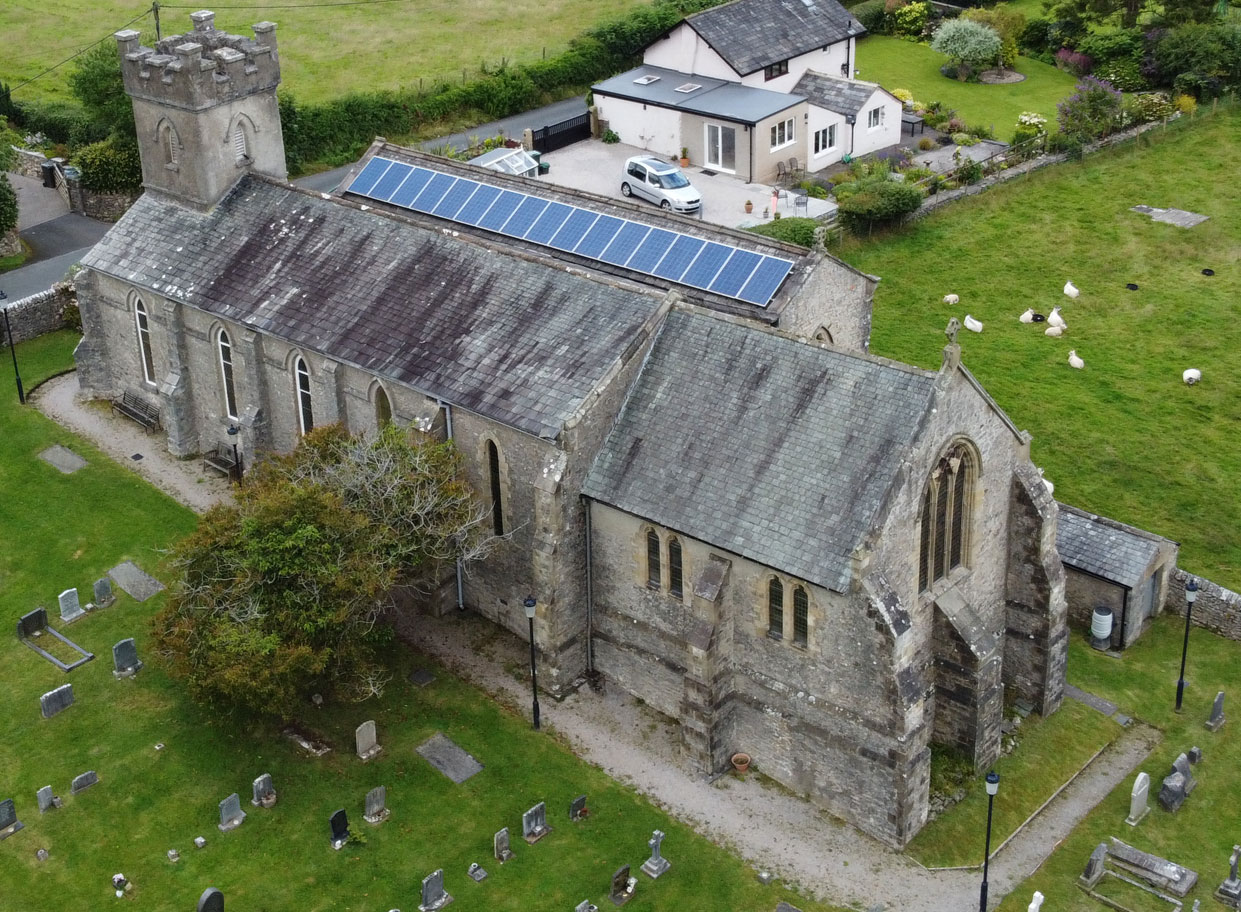
To meet the Government’s climate goals, many buildings will be heavily retrofitted over their lifetime, and it’s very possible for them to have minimal heating and cooling costs.
We aim to help plan these building’s futures to make them great spaces for their occupants and have a reduced environmental impact. Our role is to help you understand your building better and give it a bright future.
Looking to the future: solar panels
We’d love to hear from you, contact Woohoo and we can discuss your upcoming project!
It will come as no surprise that we use energy in everything we do, but what may be news to you is that every process we undertake has some loss associated with it. For example, did you know that for each time you fill your car with petrol, only approximately one third of that fuel ends up driving your car forward? The other two thirds are lost in the process of converting the fuel you purchased into motion.
Here at Woohoo, we aim to identify the losses within a building and make them visible, with the aim of minimising them as much as possible, thus improving energy efficiency. In this blog, we’ll look at just five of the ways energy efficiency can improve the efficiency of your workspace, and ultimately, your bottom line.
Radiator Performance
Heating is usually the largest energy usage within a building, and in turn can offer the highest costs. Some simple steps can make sure you are getting the best of the system you have; these include:
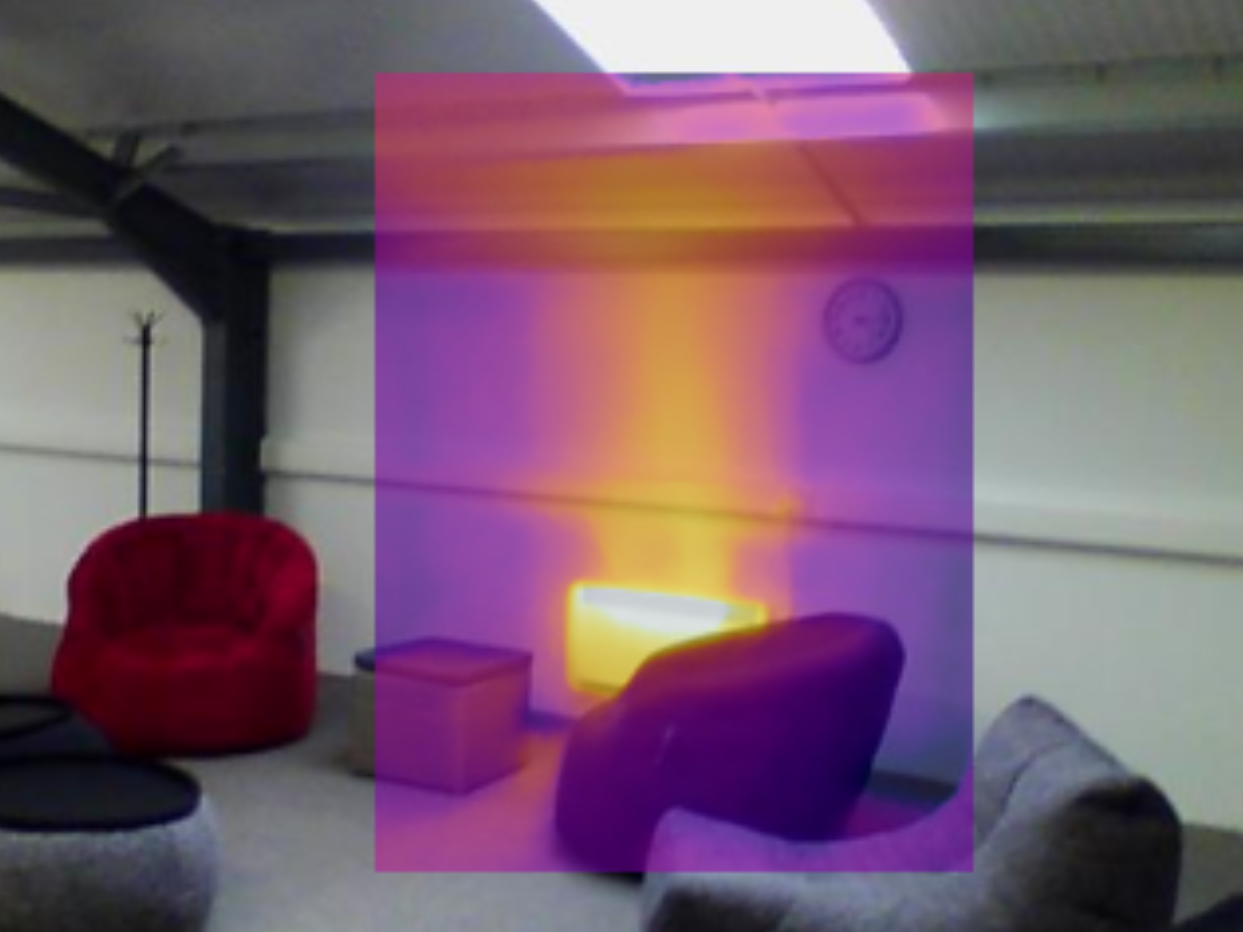
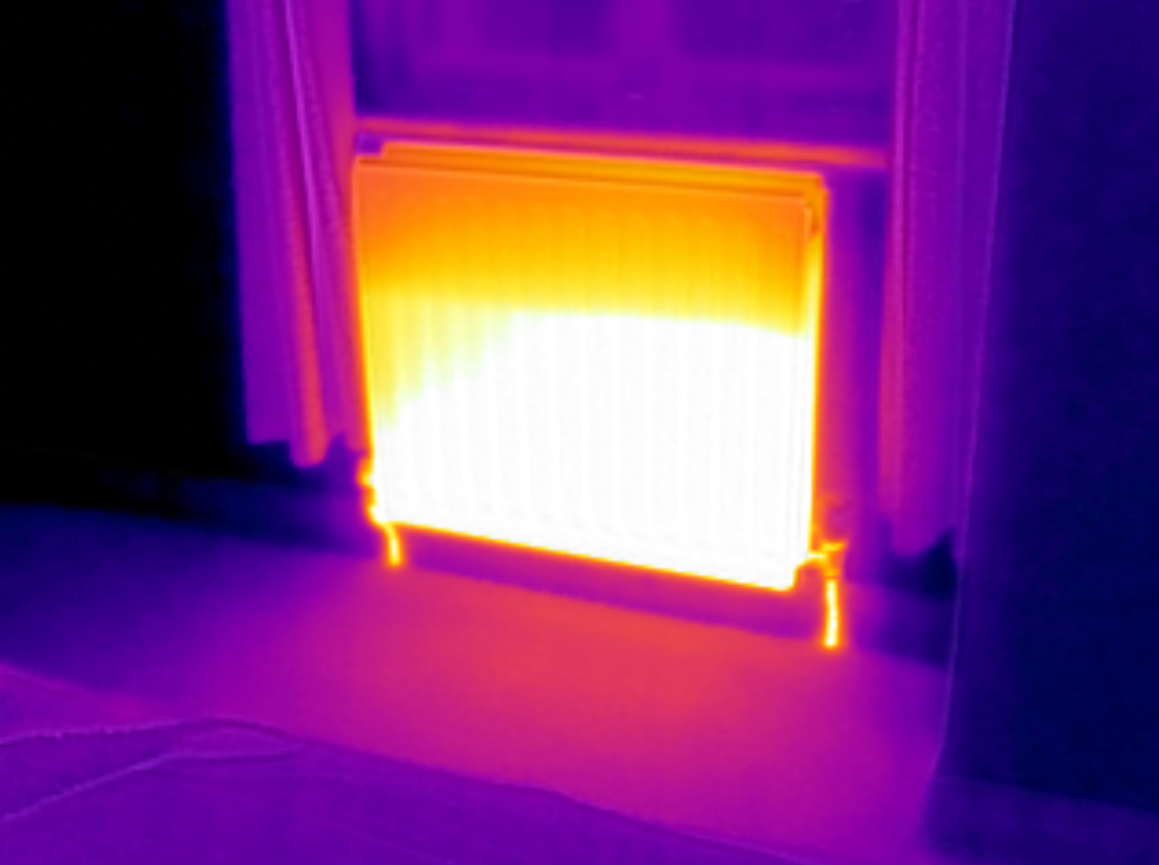
Ensuring radiators are clean and have space around them for the air to move. Dust is a pretty good insulator, and therefore reduces the heat coming from a radiator. Ensuring they are not covered and have good airflow will enable more heat to get into the room, instead of escaping elsewhere.
Bleeding radiators is the process of releasing trapped air in them, so they work at their best. By doing this, you allow them to heat the space most effectively and reduce energy loss.
Balancing radiators is the process of adjusting the flow in each radiator so all rooms in a building heat up at the same rate. This saves energy as there will be rooms that are overheated, and these rooms will in turn be trying to heat the colder rooms, which take more energy. Additionally, the flow temperature from the boiler can possibly be reduced which potentially reduces energy usage even further.
Thermal Imaging: Non Bled Radiator
Lighting
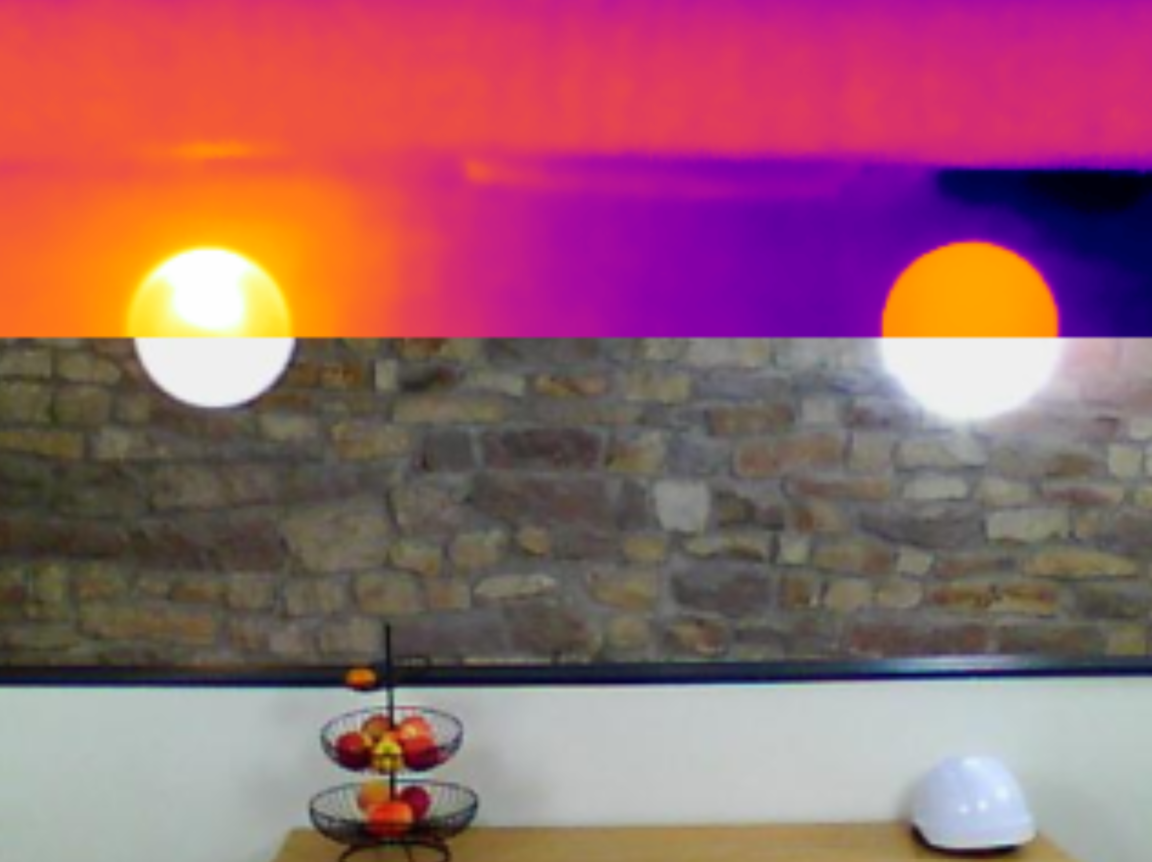
Lighting is one of the key factors that determine how comfortable a building is. With the introduction of LED lighting, the amount of energy it takes to illuminate a room is significantly less, and currently, there is almost always an LED equivalent of an existing high energy usage light, making improvements particularly convenient!
Switching to LED lighting in heritage buildings is very possible with the variety of options available and usually desirable to help show a buildings heritage assets.
A lot of the benefits of good lighting are indirect and often much more sizeable than the direct running costs.
Look for opportunities to replace older lighting technologies such as fluorescent tubes or halogen with LED; the reduced maintenance can often be significant with LEDs lasting significantly longer.
‘On’ time of lighting can always be reduced either through motion sensors, timers or changing of habits. Taking these opportunities where available can yield good cost reductions.
A well-designed lighting system can change a building. Where possible, involving a lighting designer in renovations can really improve a building. This will ensure each area is illuminated as required, the colour of LED light is comfortable for its occupants, and it is a space that people want to occupy. If a good lighting system means a space attracts more people, this in turn has knock on effects such as potentially less heating requirement, more revenue for maintenance etc.
Thermal Imaging: LED Lighting
Energy Generation (Solar Panels)
Generating your electricity requirements on site can significantly help to minimise losses. For most, solar panels are a potential option with minimal maintenance, payback periods often below 10 years, and lifetimes of over 25 years. They can also reduce dependency and load on the national grid.
If the electricity is primarily used at site, they make great financial sense particularly for businesses with high electricity requirements during daylight hours.
In exposed, rural locations, wind can be a more cost-effective option, but this typically has higher upfront costs and more maintenance from the continuous moving parts.
Appliance Usage
Modern buildings are typically filled with an abundance of appliances, all of which will be generating differing amounts of heat. The larger consumption items can be anything that handles heating or cooling of water such as fridges, freezers, washing machines, dishwashers and tumble driers along with cooking appliances.
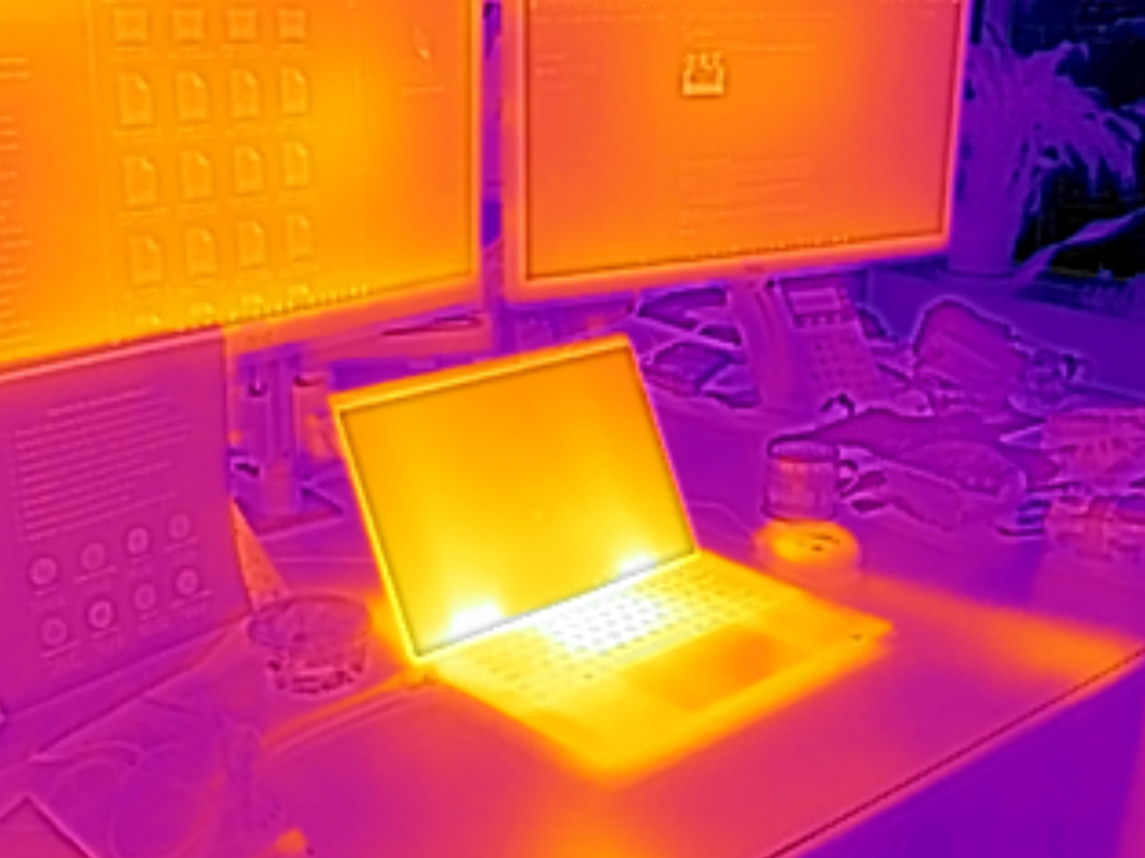
Modern computers and phones, with all their processing power, also consume large amounts of energy, which is wasted as heat. As an example, in an office, each computer is typically adding an additional person’s worth of heat, which is why in the summer months offices are particularly at risk of overheating.
Whilst the energy these waste does heat the building to a degree, there are more efficient ways of heating a building.
Think about reducing the ‘on’ time of appliances where possible, and when replacing high consumption appliances such as fridges/freezers, the highest efficiency models should be chosen.
Thermal Imaging: Laptop Wastage
Ventilation
Each internal room of a building requires some degree of ventilation to refresh the air within it. This removes contaminants, replenishes oxygen, removes the excess water vapour and aids with moving warm air around a building to heat it.
Too little ventilation and the occupants have a higher risk of illness, and the building will decay faster. Too much ventilation and the building may feel cold and cost significantly more to run. Here are things to think about when ventilating your workspace:
In domestic homes, gentle managed background ventilation through trickle vent use will lead to healthier occupants and reduced energy consumption from damp building fabrics.
In warehouse environments or churches with high ceilings, de-stratification fans can be used to circulate the air and prevent hot air accumulating in the top of a room.
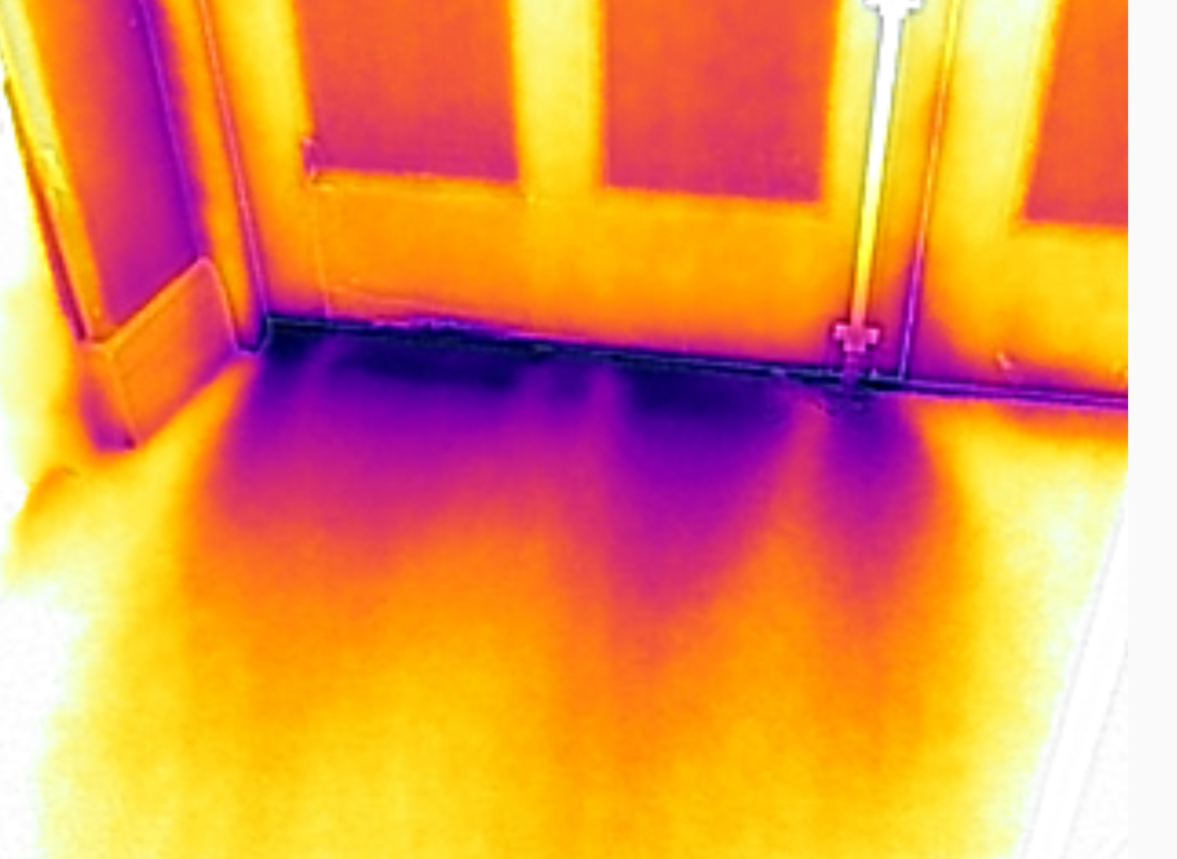
Draught proofing windows and doors can reduce the amount of uncontrolled ventilation reducing energy consumption.
During refurbishment Mechanical Ventilation and Heat Recovery Systems (MVHR) could be added to recover the lost heat from ventilation whilst actively managing the indoor air quality.
Thermal Imaging: Draft Under Double Door
Transportation
Whilst transportation is not directly building-related, reviewing all aspects of the transportation needs within your business can significantly help bring down ongoing costs. Generally, transportation uses a lot of fossil fuels and is typically inefficient at converting the energy in fuel to heat, and subsequently in motion. In turn, transporting anything is expensive and has lots of losses and greenhouse gases associated with it.
Looking at any opportunities to reduce transportation mileage has the potential to yield gains:
Firstly, and perhaps most obviously, ask the question ‘do we need to make the journey, or transport that item?’ Any reduced mileage or reduction in weight transported will save costs. This could be as complex as establishing if a business is in the correct place geographically, down to ensuring a van is not carrying too much excess weight on a daily basis.
If the journey is necessary, can it be made more efficient. Petrol and diesel vehicles are much less efficient compared with their electric counterparts. Car sharing also saves costs and emissions, and the use of public transport uses even less energy. If items are being shipped, can they be shipped by sea, which may take longer but is significantly cheaper than flying. Sending items over a longer time frame costs less and has less energy and emissions associated with it.
Lastly, is the most efficient route being chosen for the mode of transport. For a motor vehicle, the amount of energy a journey takes is dependent on how fast we want to get there. A route may be the quickest, but we may have travelled many additional miles and at a higher speed to get there. Choosing a shorter, that is slightly slower, will save a significant amount of energy.
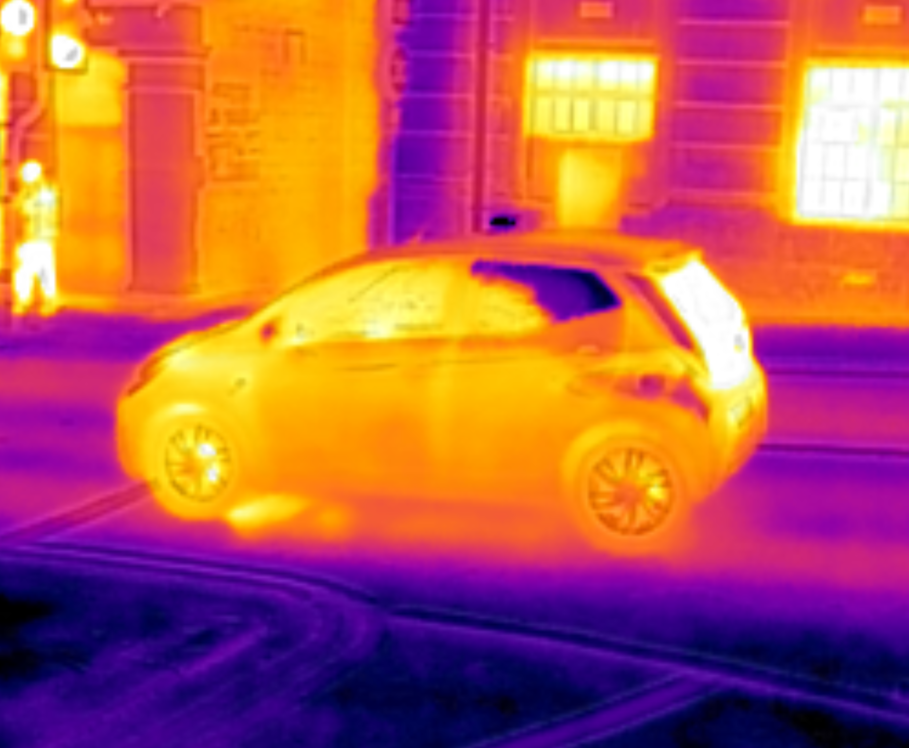
Thermal Imaging: Car
Get in Touch
If you’re unsure where to start with improving the efficiency of your building, be sure to contact Woohoo today and we can off you the support and guidance you need to get the best out of your workspace.
Comments Off on Woohoo Champions Middleton Heritage Trail
As part of the National Heritage Open Days celebrations, Woohoo is proud to have helped develop the Middleton Heritage Trail, leading visitors through the town’s Golden Cluster of Architecture and History.
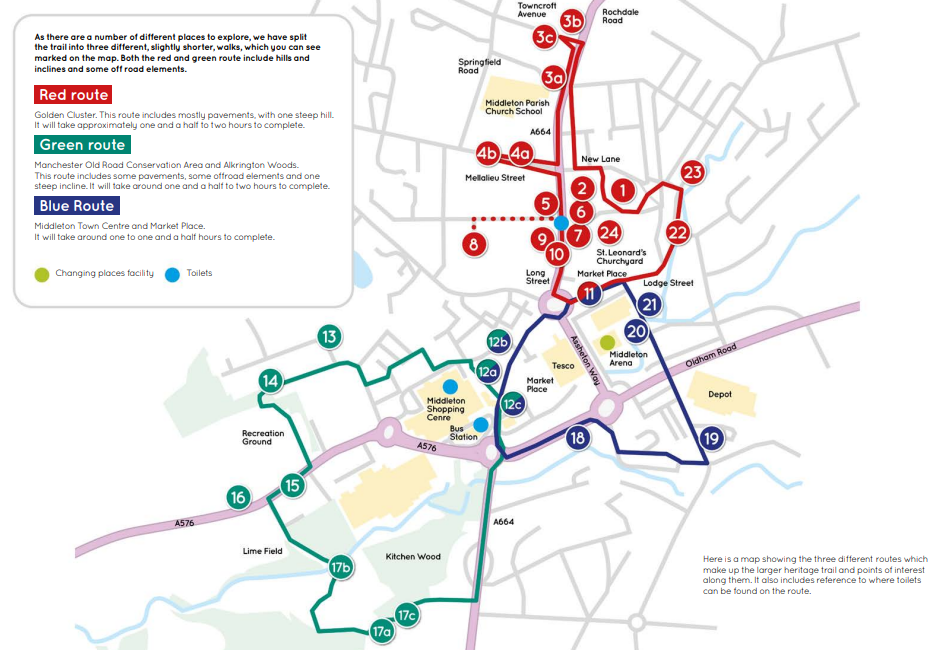
Map of the Heritage Trail
Middleton, a town with a rich and proud history is located in the borough of Rochdale, and is famous for its arts and crafts architecture, as well as its silk industry and links to radical reformers.
The trail – developed by Woohoo, along with council officers, local residents and volunteers with the help of funding from Historic England, Middleton Township and the Shared Prosperity Fund – has been created as part of the Middleton Town Centre Conservation Area Regeneration plan.
Covering 24 sites, the heritage trail leads visitors through a celebration of the long and proud history of the town. Each site having its own captivating story, visitors can choose to follow the trail in one go or follow one of three shorter routes. Guided walks of these trails will be taking place on Saturday 14th and Sunday 15th September 2024.
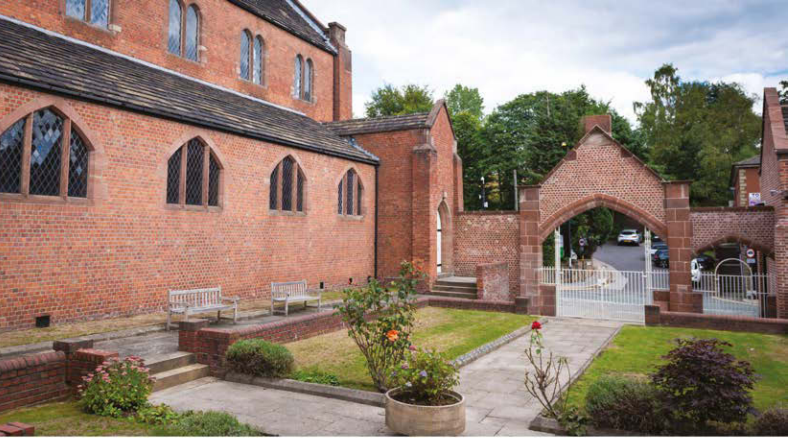
Visitors to the trail will marvel at Middleton’s oldest church, explore architectural gems designed by eminent Middleton architect Edgar Wood, and discover the town’s links to the Jacobite rebellion and the Peterloo Massacre. The trail journeys through Middleton’s parks and green spaces, with participants also having the opportunity to discover the beautiful late 19th century suburbs, stunning Palladian architecture, Middleton’s mills and learn about Middleton’s social history to understand what it would have been like to live and work in the town during the industrial revolution
Grounded in architectural thinking, Woohoo is a collective of specialists in Heritage and Sustainability, providing our services to Architects, Homeowners, Commercial Clients and Local Authorities. We work together to use our individual knowledge of these specialist areas to guide clients through their project and deliver their ambitions, with solutions that that make a real difference to clients, place, and project.
To discover more information about the Middleton Heritage Trails click here, and to learn more about Woohoo’s heritage and sustainability mission follow this link.
Comments Off on Woohoo heads North (again) to BE-ST Fest
BE-ST Fest
BE-ST (standing for Built Environment – Smarter Transformation) is formerly Construction Scotland Innovation Centre and to quote them directly:
“Our mission is to accelerate the built environment’s transition to zero carbon emissions”.
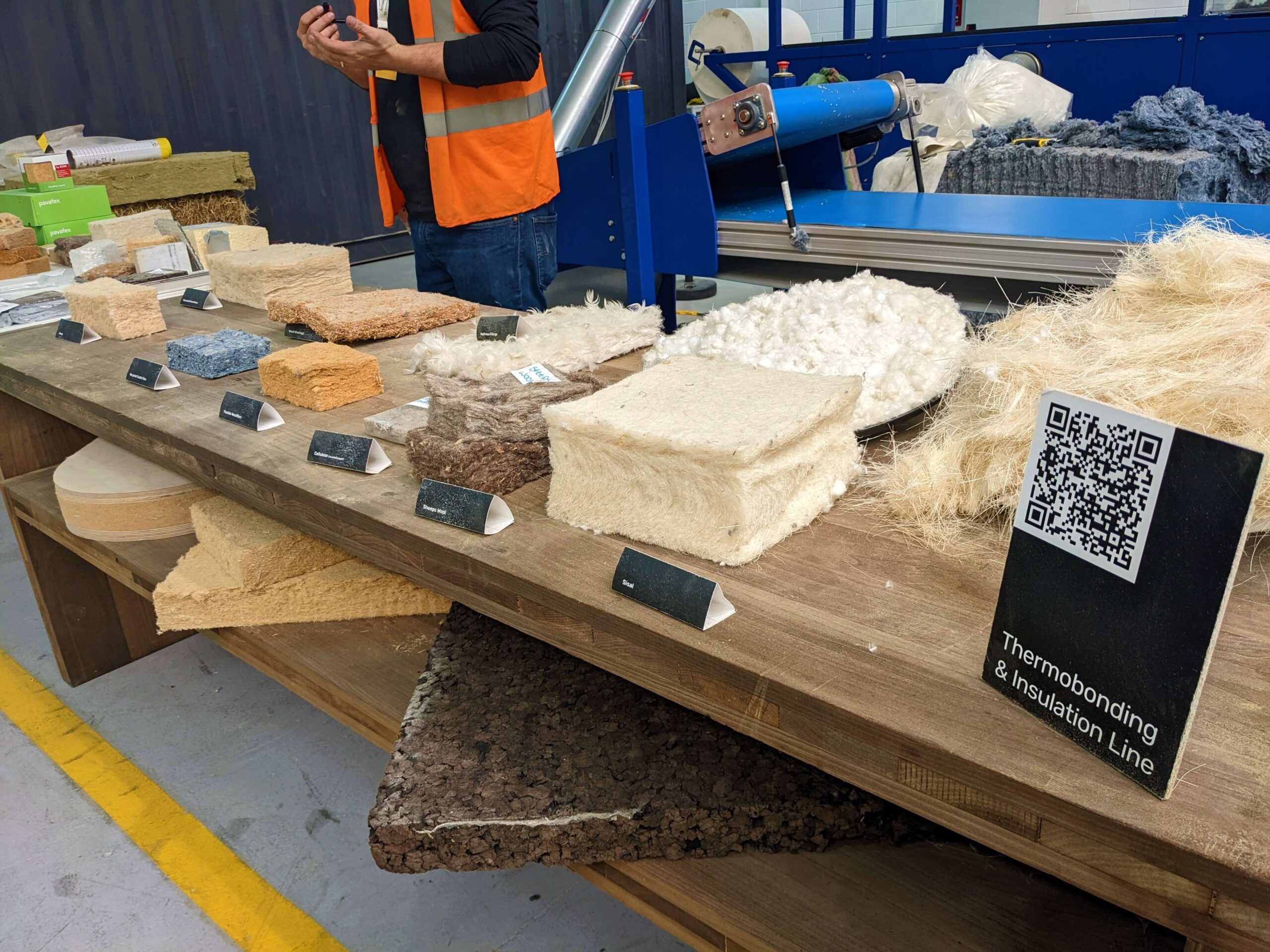
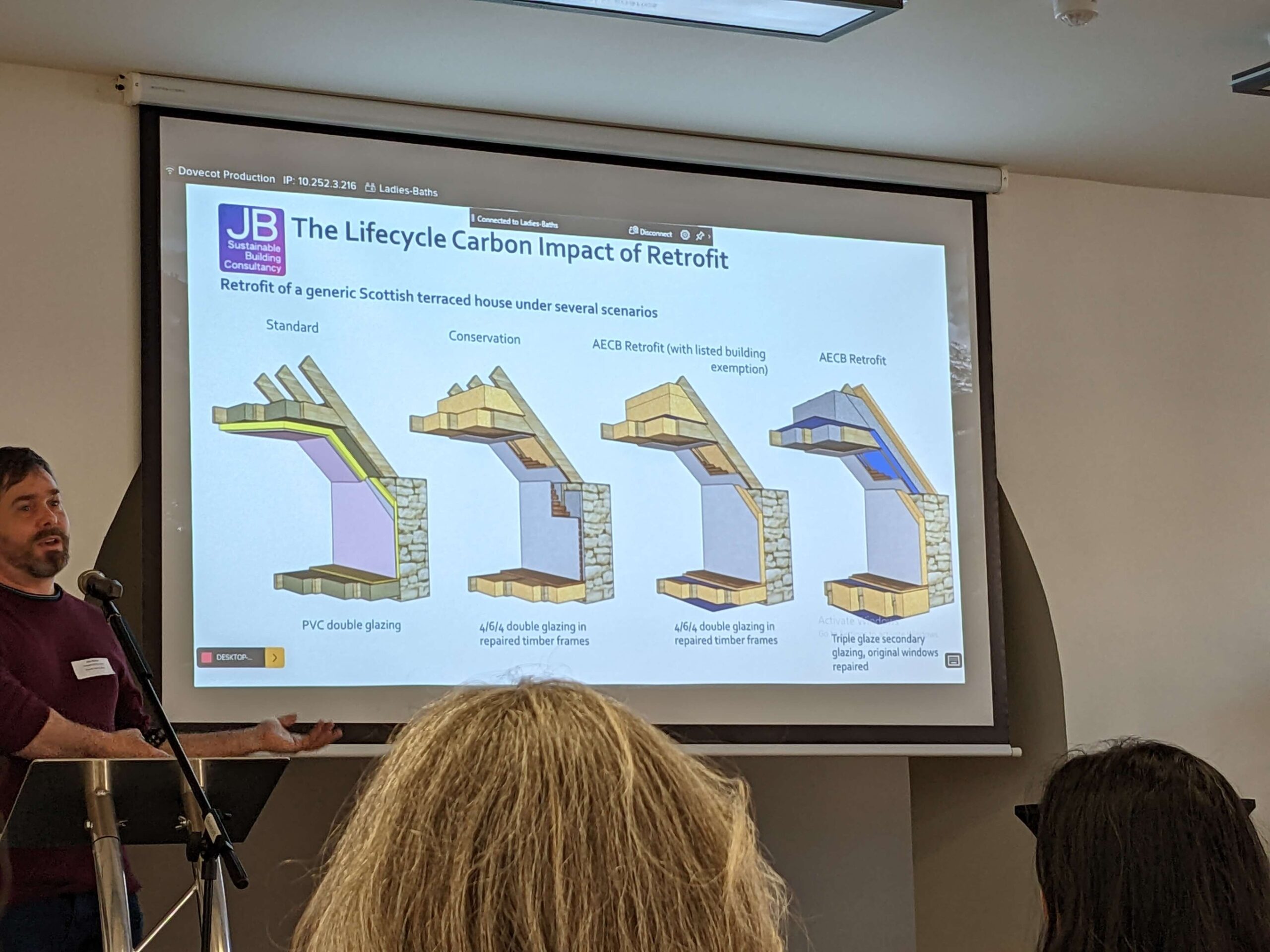
We got to listen to many great speakers on how Scotland is trying to tackle the Carbon Consumption of their built environment. Whilst a giant mountain to climb it was good to hear so many people up for the challenge. The event finished with a tour around the BE-ST workshop where we got to see various pieces of test and training equipment and how BE-ST is supporting Scotland to achieve it’s net zero carbon building targets.
This year, the conference was focused around Sustaining Building
Attendees from all across the UK gathered to discuss how traditional buildings can help us meet net carbon zero, whilst still maintaining the integrity of our built heritage.
The event saw numerous industry experts presenting ideas and research findings throughout the day, as well as Q&A sessions and workshops in retrofit and the green agenda.
SPAB (Society for the Protection of Ancient Buildings) is a charity co-founded by William Morris in 1877, the manifesto for which still underpins the Society’s activities today. STBA (Sustainable Traditional Building Alliance) is made up of the UK’s leading organisations associated with the conservation and improvement of traditional buildings, and their aim is to deliver sustainable but traditional built environments. Big thanks to everyone who presented and all the people we got chatting to. It was great to share experiences and where we collectively we would like to take building conservation.
Within the local area we are privileged to have some real specialists with extensive knowledge of how to use lime in building and conservation.
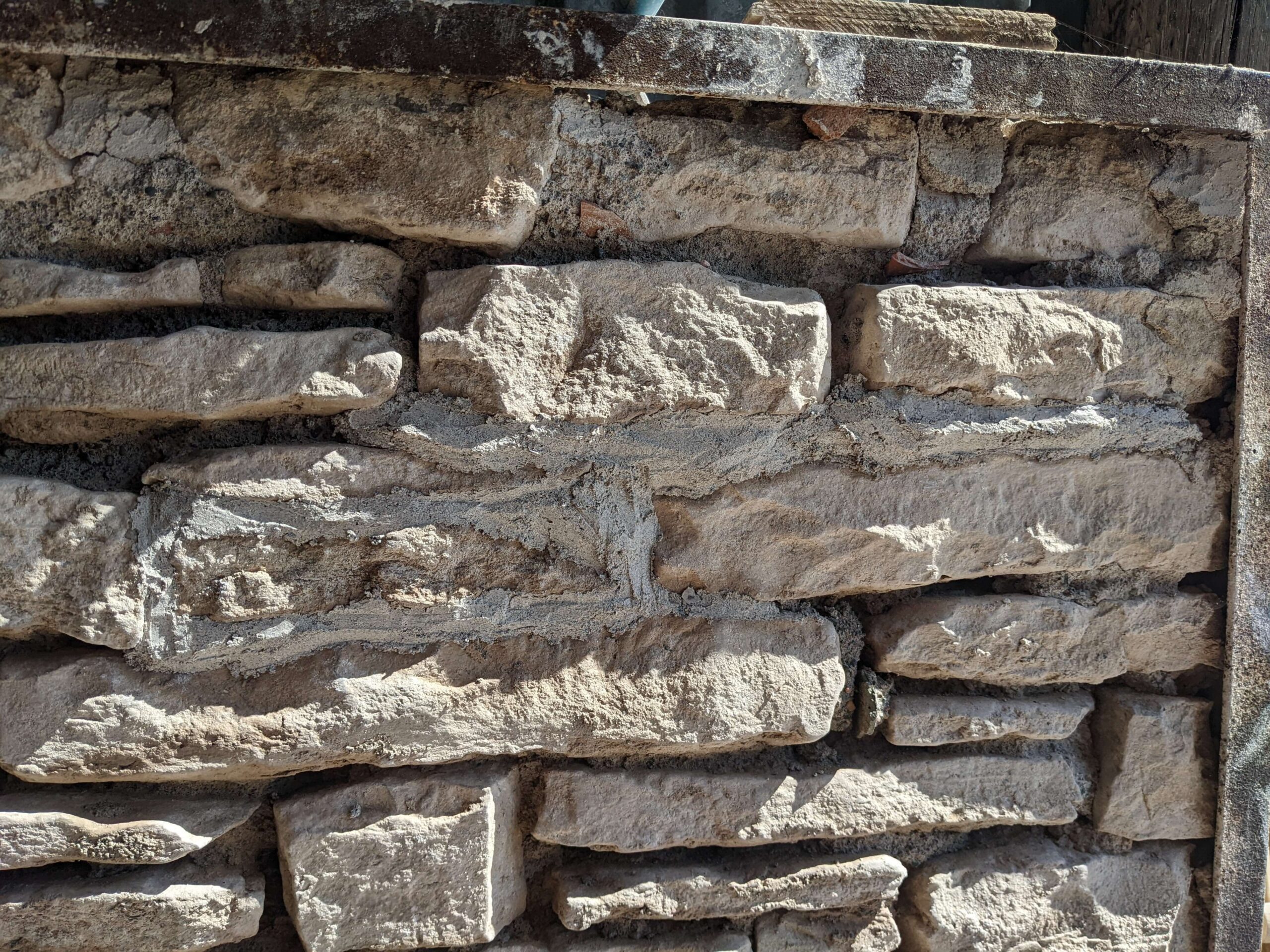
Using lime mortar to point buildings is a traditional technique, used in most properties built prior to 1919. It was utilised historically as it was strong, durable, but softer than the host masonry used in common building. Lime mortar allows moisture to move through solid-walled structures, creating what is later defined as ‘breathable’ buildings.
The first stop on the journey was a visit to Tim Wells at Eden Hot Lime Mortar who whilst provides many lime products is very keen to pass on hands on knowledge and experience in using lime through his training courses.
We’ve used Tim’s products on many personal and professional projects but this hands on day greatly improved our feel for the product, what varying the specifications of it does and how to then to best use it in building.
The next stop was meeting up with David Wiggins of Clach Conservation showing us various church conservation projects concluding in a visit to Carlisle Castle Keep. We really got to pick an experts brain in various methods of how to conserve very significant heritage buildings.
Hug thanks to Tim and David, we learnt a huge amount.